
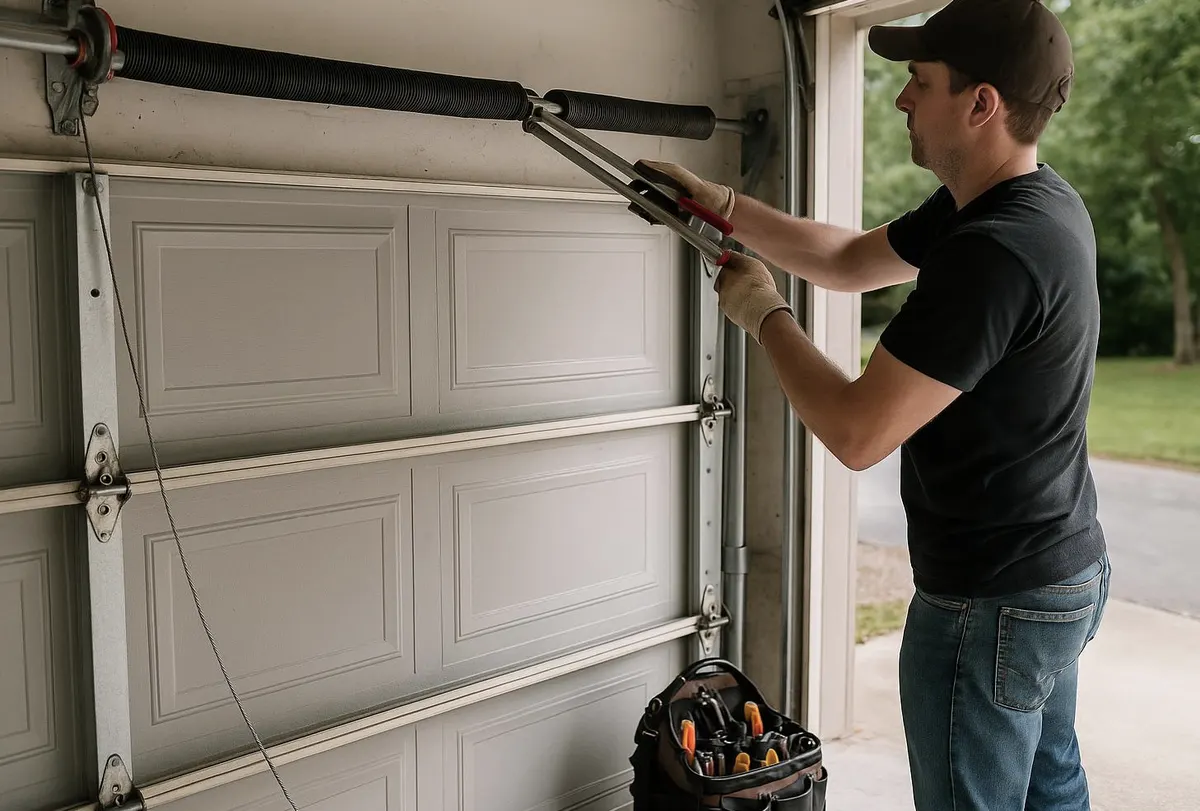
Skip garage door upkeep this time of year and the bill usually comes due in January, not October. A spring that's been quietly rusting since August will snap on the coldest morning of the year, usually while you're backing out for work. A door that's been dragging on a swollen track all summer will finally jump it the first time temperatures dip and the wood or vinyl contracts. None of this is dramatic until it is, and by then you're looking at an emergency call instead of a twenty-minute fix.
Why This Transition Matters More Than People Think
Lakeland doesn't get a hard winter, but it does get a real shift. Hurricane season technically runs into late November, so the first cool fronts often arrive on the heels of one last tropical system. That means your door's wind-load hardware and weatherstripping are still doing storm duty even as humidity starts dropping and nights get genuinely cool for the first time since spring. That swing from soaked to dry, and from hot to cold overnight, is harder on a garage door than steady weather in either direction.
Check for What Summer Already Did to Your Door
Before you winterize anything, find out what the wet season left behind:
- Rust on springs, hinges, and track bolts. Months of humidity and afternoon downpours are enough to start surface rust, especially on doors that get direct exposure to blowing rain. Light surface rust can be wiped down and treated; pitted or flaking rust on a spring means replacement, not touch-up.
- Swollen wood panels or trim. If you have a wood or wood-composite door, check where panels meet. Moisture swelling that was masked all summer by consistently high humidity can suddenly show up as sticking or misalignment once drier fall air lets the wood shrink back.
- Track separation from storm wind. Even a near-miss storm can rack a door hard enough to loosen track brackets. Look for gaps between the track and the wall, or a track that's no longer plumb.
Lubricate Before the Dry Air Sets In
Rollers, hinges, and the torsion spring itself need fresh lubricant going into the drier months, not after. Humid summer air keeps some moving parts from binding even when they're under-lubricated; once that moisture drops out of the air, the same worn grease turns stiff and parts start grinding. Use a garage-door-specific silicone or lithium-based lubricant, not WD-40, which displaces moisture short-term but doesn't actually lubricate long-term. Hit the roller stems, hinge pins, the spring coils, and the opener's chain or screw drive.
Reset Your Weatherstripping and Bottom Seal
The rubber seal along the bottom of the door and the weatherstripping around the frame take a beating from UV and heat all summer. By fall it's often cracked, flattened, or pulling away from the track. A failing seal doesn't just let in cooler drafts, it lets in the fine dust and debris that kicks up once the daily downpours stop and the ground dries out. Replacement strips are inexpensive and most homeowners can swap them in under an hour; the harder part is making sure the new seal is actually compressing evenly along the full width of the door, not just at the ends.
Test the Opener and Safety Sensors
If your opener has struggled through a summer of power blips from storms, now is the time to confirm it's still behaving correctly, not wait until it fails on you:
- Check that the photo-eye sensors near the floor are still aligned and clean. Storm debris or a bumped ladder can knock them off just enough to cause random reversals.
- Test the auto-reverse function by placing a piece of wood in the door's path and confirming it stops and reverses immediately.
- If your opener has a battery backup, verify it actually holds a charge. Late-season storms still bring power outages, and a dead backup battery defeats the purpose of having one.
Hardware That's Still Doing Storm Duty
Wind-rated doors and their reinforcing hardware don't get a break just because the calendar says fall. If you added temporary bracing or a bracing kit during storm season, inspect it for rust or loosened bolts before deciding whether it needs to stay in place through the rest of hurricane season. Track brackets, lag screws, and strut reinforcements all benefit from a hand-check: give them a firm wiggle and listen for play that wasn't there in the spring.
When to Call Lakeland Door & Opener
Most of the above is a Saturday-morning job. But if you find a spring with visible pitting, a track that's pulled away from the wall, or a door that's noticeably heavier to lift by hand than it used to be, stop there. A spring under tension that's already rusted is a genuine injury risk, and a track that's out of alignment can jump completely off its rollers without much warning. That's where our Garage Door Spring Repair and Off Track Door Repair services come in; we'll replace worn hardware with the correct wind-rated parts for this area and get the door moving smoothly again, not just functional.
If you'd rather have someone go through the whole door, hardware, opener, and seals in one visit, our Garage Door Maintenance & Tune-Up covers exactly the checklist above, done right the first time.
If your garage door needs attention before the next front rolls through, call Lakeland Door & Opener. We serve Lakeland, Winter Haven, Bartow, Plant City, Auburndale, Mulberry, Polk City, and Haines City, and we show up when we say we will.