
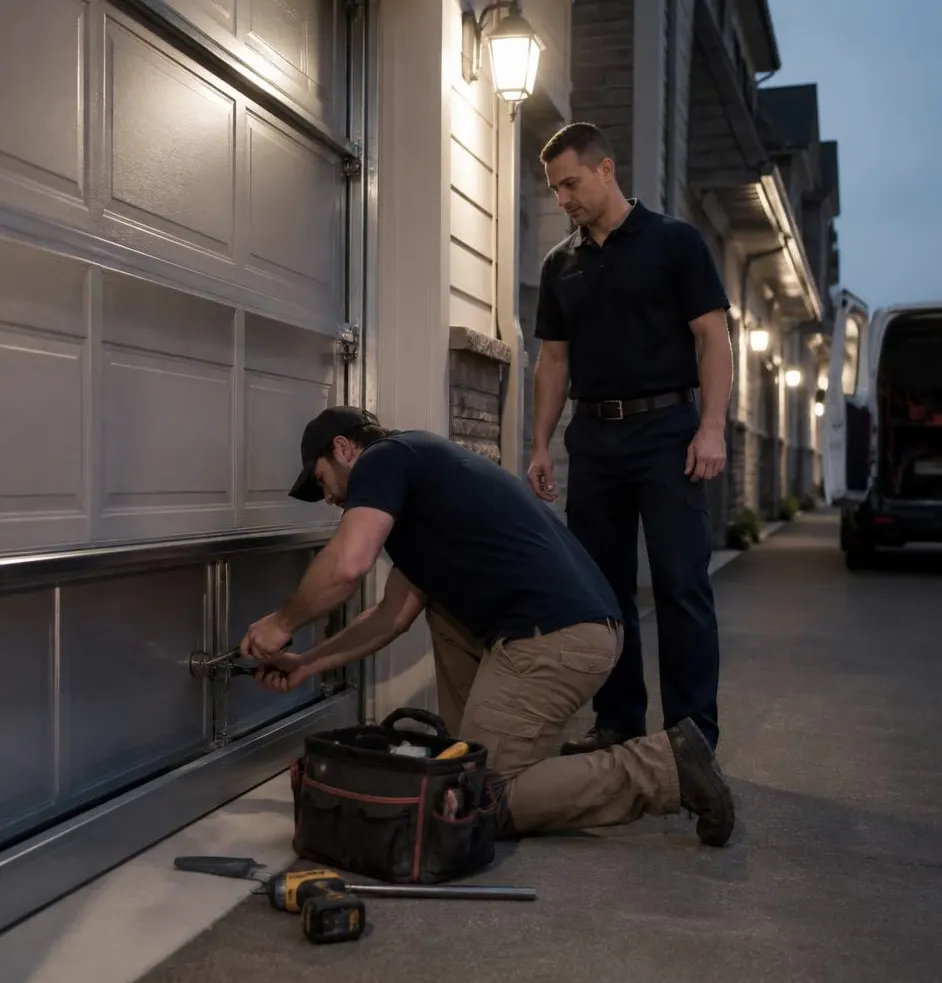
What We See When a Garage Door Fails in a Storm
A typical call after a rough afternoon storm starts the same way: the door looks fine from the driveway, but once it's opened, the track is pulled away from the wall framing on one side, a panel is bowed or cracked, and the rollers have popped out of their track entirely. Sometimes the door held, but the owner noticed it flexing and rattling during the worst of the wind and wants it checked before the next system comes through. Either way, the root cause is almost always the same: the door wasn't built or reinforced to handle sustained wind pressure, and nobody noticed until the wind showed up.
Why the Garage Door Is the Weakest Wall in the House
Every other wall on a house is a solid, continuous surface. The garage door is a large moving panel held in place by tracks, rollers, hinges, and a spring system — and in most homes, it's the biggest single opening in the entire structure. When wind pushes against a closed garage door, it's pushing against the one wall section that isn't a wall at all; it's a hinged assembly resisting the pressure with hardware instead of framing.
If that door fails and blows in, the problem doesn't stay contained to the garage. Wind that gets inside a home through a failed garage door pressurizes the whole structure from within, pushing up on the roof and out on the walls. That's why wind-load ratings for garage doors matter so much in storm-prone areas like Polk County — the door isn't just protecting what's parked inside, it's protecting the integrity of the whole house.
Warning Signs a Door Won't Hold Up
Most homeowners don't think about their garage door's wind resistance until a storm is already in the forecast. A few signs are worth checking now, before that happens:
- Visible flex or rattle in the panels when the door is closed and wind hits it, even in a regular afternoon gust.
- Worn or rusted rollers and hinges that no longer sit flush in the track.
- Loose or corroded bolts where the track attaches to the wall framing — a common failure point.
- A single-layer, non-insulated door, especially on older homes that predate current wind-load standards.
- Gaps along the bottom seal that let daylight or water through.
- No manual release or backup plan if the opener loses power mid-storm.
None of these mean a door will definitely fail in a storm, but together they're a pretty clear picture of a door that hasn't been checked in a while.
Steps to Take Before the Next System Rolls Through
A few practical moves go a long way, and most don't require replacing the whole door:
- Check and tighten track hardware. Florida humidity causes wood framing to swell and shrink, which loosens the bolts holding the track in place over time. A loose track is one of the most common reasons doors come off their rails during high wind.
- Replace worn rollers and hinges. Nylon rollers tend to hold up better than steel in this climate and run quieter, but either way, cracked or rusted rollers should be swapped before storm season peaks rather than after a failure.
- Add or inspect bracing. Vertical reinforcement struts, installed to the door manufacturer's specs, stiffen panels against wind pressure. Not every door is set up for this out of the box, so it's worth having it checked.
- Seal the bottom and sides. Wind-driven rain during Florida storms finds every gap. A fresh bottom seal and side weatherstripping keep water out and reduce the chance of swelling along the door's edges.
- Know the manual release. If the opener loses power during a storm, you want to be able to secure the door manually rather than leave it hanging on the opener's chain or belt.
- Consider a wind-load rated replacement if the current door is original to an older home or shows repeated flexing. This is the more involved option, but for homes with large openings or a door that's clearly undersized for today's wind standards, it's the fix that actually solves the problem instead of patching around it.
Humidity, Rust, and the Coastal Air Factor
Even away from the coast, salt-laden air moves inland with onshore winds, and combined with Central Florida's humidity, it accelerates rust on springs, cables, and hardware faster than drier climates. Torsion springs and cables that look fine on the surface can be weaker than they appear, and a rusted cable is far more likely to snap under the extra strain of wind pressure. A quick visual check for rust streaks, fraying cable strands, or stiff, squeaky hinges during the wetter months catches problems before they turn into a failure during an actual storm.
When to Call Lakeland Door & Opener
If your door flexes, rattles, or has come off track after a storm, that's not something to leave until it happens again — give us a call. We handle Off Track Door Repair for doors that have already slipped their rails, and our Garage Door Maintenance & Tune-Up service covers exactly the kind of hardware checks — track bolts, rollers, cables, hinges — that catch weak points before wind finds them. If your current door is older, undersized, or clearly not holding up to Polk County storms the way it should, we can also talk through Garage Door Installation & Replacement options built for this climate.
Lakeland Door & Opener serves homeowners throughout Lakeland, Winter Haven, Bartow, Plant City, Auburndale, Mulberry, Polk City, and Haines City. Call us before the next system is in the forecast, and we'll make sure your garage door is ready to hold its ground.